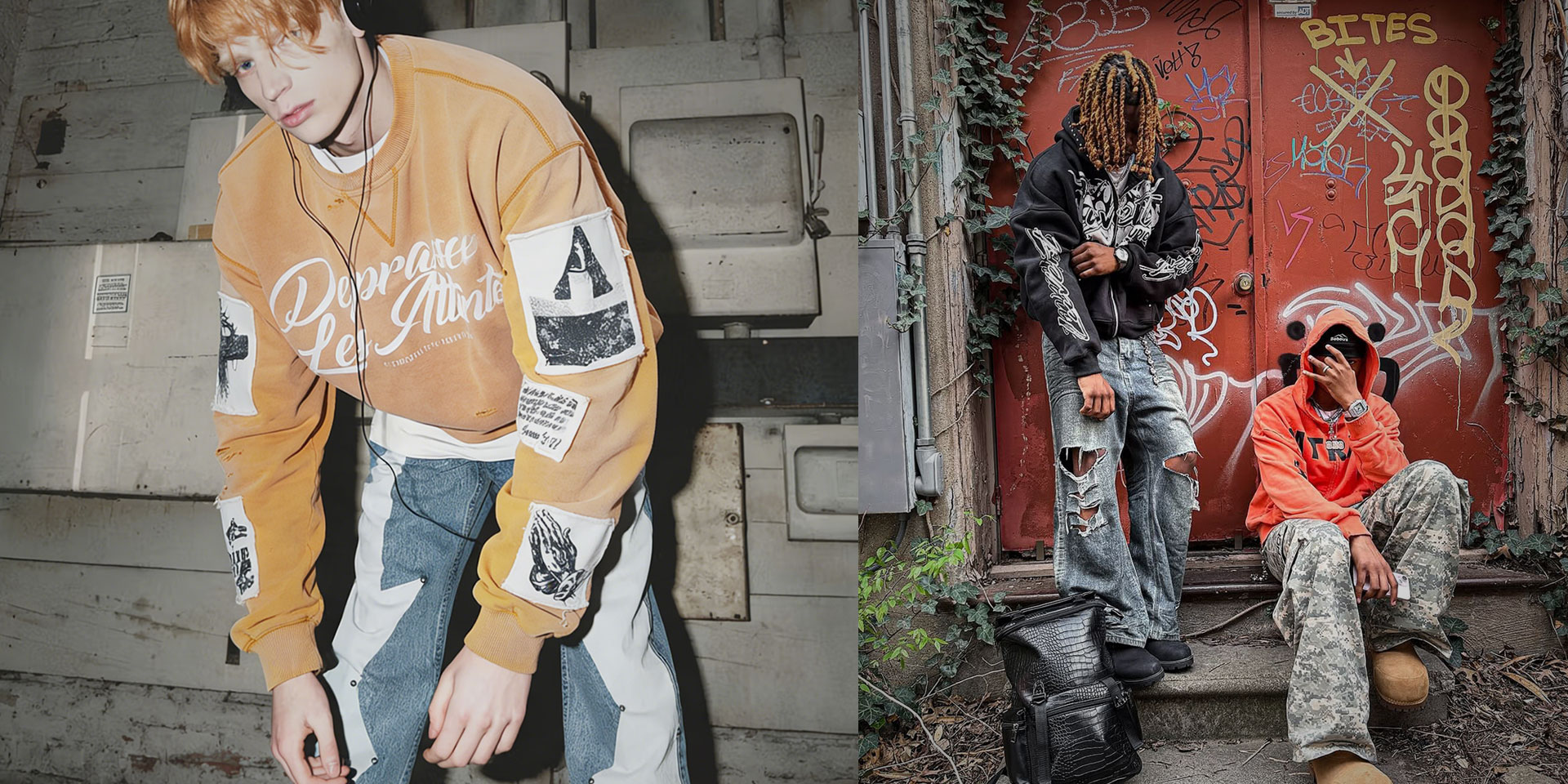
What Makes a Sweatpants Manufacturer More Useful to Brands Moving Into Larger Volumes
Sweatpants used to sit in the “easy” part of the line. Not the hero jacket. Not the washed graphic hoodie that eats half the sample budget. Not the denim program that turns one fit mistake into months of back-and-forth. Just pants. Soft, familiar, commercially safe.
That view breaks fast once the numbers get bigger.
A lot of established streetwear brands and independent brands with real traction find this out the hard way. The first run looks good. The early photos land. The set sells. Then reorders hit, colors expand, sizes spread out, and the category starts showing its real weight. Suddenly the questions are not about whether a factory can make sweatpants. They are about whether the leg still falls the right way, whether the cuff starts biting too hard, whether the waistband still recovers after wear, and whether the second run still feels like the product people bought the first time.
What sounds like a simple sourcing question usually turns into a product-system question. A useful sweatpants manufacturer is not just one that can sew fleece. It is one that can protect shape, fabric behavior, visual balance, and production rhythm after the category stops being a side item and starts becoming a real volume driver.
Why do sweatpants become a more serious manufacturing category once volume goes up?
A sweatpants program gets harder when it moves from “one good drop” to repeat-volume business. At that point, comfort, silhouette, fabric weight, waistband recovery, cuff pressure, grading, and post-finish behavior all start affecting sell-through, reorders, and customer trust at the same time.
At low volume, a lot can be hidden by novelty. A set looks good in the campaign. A fleece pant feels solid in hand. The overall mood is right. But once the category starts moving in bigger numbers, the garment stops being judged like a styling prop and starts being judged like a repeat purchase.
That changes everything.
Sweatpants are worn hard. They get washed often. They get compared directly against earlier drops. They are also one of the easiest products for customers to read instantly. People may not know how to explain it in technical terms, but they can feel when the leg looks flatter, when the rib looks cheaper, when the rise feels off, or when the fabric loses body faster than it should.
This is why a real streetwear bottoms program cannot be treated like a simple extension of hoodie production. Bottoms carry their own pressure. The silhouette has to feel intentional from the waist down. The fabric cannot just feel soft; it has to support how the shape sits on body. And once the style becomes part of a core set or repeat seasonal program, minor drift stops being minor.
Which product details separate a bulk-ready sweatpants manufacturer from a factory that only handles samples well?
The difference usually shows up in the parts that get overlooked in early sourcing conversations: waistband construction, elastic behavior, cuff tension, pocket entry reinforcement, crotch balance, side seam stability, and how the fleece hangs after finishing. A clean sample is not proof of bulk readiness.
A sample-friendly factory can often make one nice-looking piece. That is not the same as building a repeatable bottoms category.
The real separation starts in places that do not photograph well but absolutely shape the product:
Waistbands are a big one. If the tunnel construction is uneven, if the elastic spec drifts, or if the drawcord channel starts twisting under pressure, the garment loses its polish fast. Cuffs matter just as much. Too weak, and the hem looks dead. Too tight, and the whole leg closes down in the wrong place. That does not just change comfort. It changes the line of the product.
Then there is pocket behavior. Weak pocket openings collapse. Bad reinforcement shows up after wear. A pocket bag that pulls the front panel the wrong way can distort the whole stance of the pant. Add washed fleece or garment dye, and all of that becomes more sensitive.
The most useful streetwear clothing manufacturers know that sweatpants are not just “hoodie fabric with legs.” They treat rise, thigh ease, knee break, hem behavior, and pocket placement as part of one product system. That is usually where general apparel factories start to get exposed. They can sew the garment, but they cannot always protect what the garment is supposed to feel like once it is worn, washed, packed, and repeated in volume.
How much of sweatpants performance is really about fabric behavior rather than sewing?
A lot more than many teams expect. Sewing matters, but fabric behavior sets the ceiling. If fleece weight, yarn quality, brushing response, shrink allowance, dye stability, and post-wash recovery are not understood early, the garment can lose shape and mood even when the sewing line is clean.
This is one of the biggest blind spots in sweatpants development.
Teams will sometimes approve a sample because the construction looks solid, but the bigger question should be: what happens after finishing, pressing, packing, shipping, and real wear? That answer lives in the fabric.
A strong sweatpants factory has to understand the difference between fabric that feels heavy in hand and fabric that actually supports a streetwear silhouette. Those are not always the same thing. A fleece can hit the right gsm and still fall flat. It can feel plush and still lose rebound. It can brush beautifully and still shrink in a way that changes inseam behavior, cuff pressure, or waistband comfort.
That is why washed sweatpants deserve more front-end attention than many teams give them. Garment dye, vintage fading, surface abrasion, and softening processes can all improve the visual language of the piece, but they also change how the fabric reads after the garment leaves the sample room. Teams that want a deeper take on fabric mood, finish risk, and how surface treatment changes a garment over time can go further through these advanced streetwear washing workflows, especially when the goal is to keep washed pieces from feeling flat, overprocessed, or disconnected from the brand’s visual direction.
The same logic applies to decoration. If the product includes embroidery, prints, appliqué, or layered branding, fabric behavior becomes even more important. Print chemistry, surface texture, wash depth, and fleece density all affect how the artwork lands. Teams comparing decoration routes in a more technical way can use this screen-print and DTG decision path for streetwear products as deeper background reading, not because sweatpants are “just about printing,” but because graphics, fabric, and silhouette rarely behave as separate decisions in real streetwear development.
What should brand teams lock down in fit and block development before scale makes changes expensive?
A sweatpants style should be approved as a block, not just as a sample. That means the rise, seat, thigh volume, leg flow, cuff opening, waistband pressure, and grade behavior all need to be understood as one controlled structure before the style moves into larger commitments.
This is where a lot of brand teams lose time.
They approve what looks like the right silhouette on one sample size, then find out later that the shape does not hold once it moves across the size range. Or the sample looks right before wash, but not after. Or the waist feels good on fit model one, but the grade rule makes the larger sizes lose the intended line.
Streetwear sweatpants are especially sensitive here because proportion is the product.
A relaxed straight-leg style needs enough weight and width to look deliberate, not lazy. An oversized silhouette needs volume without turning into a tube. A stacked leg needs the right outseam flow and hem behavior or it starts looking accidental. Open hems, elastic hems, and adjustable hems all create different visual endings. None of that should be left to chance.
The best product development teams treat bottoms blocks like branded assets. They are not just approving measurement charts. They are approving a visual language: how the seat sits, how the leg opens, how the fabric breaks at the shoe, how much attitude lives in the shape before graphics even enter the conversation.
That is one reason sweatpants often become a serious indicator of whether a factory really understands streetwear or is still reading the category through ordinary menswear logic. General factories tend to normalize. They make the shape safer. They reduce drama. They clean up what was supposed to feel more charged. Streetwear brands with proven sales usually need the opposite: not chaos, but control without flattening identity.
Where do sweatpants programs usually break between sample approval and bulk production?
Most breakdowns do not begin in the idea. They begin in the handoff. The common failure points are fabric substitutions, elastic changes, wash variation, cutting drift, rushed finishing, and poor communication between the approved sample and the actual bulk execution path.
This is the part brand teams usually remember because it is where money starts burning.
The sample was signed off. The fit looked good. The fabric felt right. Then the bulk run arrives and the product is not fully wrong, but it is wrong enough. The leg does not hold the same way. The waistband feels different. The rib pressure is off. The wash looks cleaner, flatter, or just less alive. The graphic sits a little differently on body. Nothing looks catastrophic on paper. Everything feels smaller once it is in hand.
That is why front-end review matters so much. A factory that only “produces according to the tech pack” can miss the real risk. A more useful cut-and-sew streetwear factory reads ahead. It asks whether the wash will dull the graphic too much. Whether the embroidery will over-harden the panel. Whether the grade keeps the same visual proportion across sizes. Whether the chosen elastic will change the stance of the leg. Whether the chosen finish will add softness but kill structure.
The brands that scale this category well are usually the ones that stop treating pre-production as a paperwork stage and start treating it like risk control. That means fabric locking, trim locking, fit confirmation after finishing, and production checkpoints that match the actual sensitivity of the product. Sweatpants may look calm compared to a patch-heavy varsity jacket or a distress-heavy zip hoodie, but once they turn into repeat business, they punish loose handoffs just as hard.
How does a more useful sweatpants manufacturer help procurement teams and product developers reduce downstream risk?
The most useful manufacturer makes risk visible before it becomes expensive. It turns product intent into checkpoints: tech-pack review, fabric verification, fit confirmation after finish, trim locking, pre-production review, and category-specific inspection logic that reflects how sweatpants actually fail in bulk.
For procurement teams, this matters because bottoms errors do not stay in production. They travel downstream. They show up in late corrections, higher rework, slower replenishment, mismatched set programs, and customer complaints that sound subjective but usually trace back to a very physical issue.
A useful streetwear manufacturer helps reduce that by making the conversation more operational. Not just “we can do it,” but: here is what has to be locked before the order moves; here is what becomes non-negotiable at higher volume; here is where the product is structurally sensitive; here is what should be checked again after wash, not only before.
That is also why compliance and process discipline matter more than people sometimes admit in streetwear. When a category becomes important to repeat business, teams need more than aesthetic talent. They need traceability, audit readiness, and process maturity. For readers who want a deeper look at how brand-side risk control increasingly overlaps with audit and sourcing expectations, this breakdown of SMETA 4P social compliance frameworks and how they differ from BSCI is useful context, especially when the question is not just “can this factory make the garment?” but “can it support a long-term program without turning every reorder into a fresh gamble?”
In other words, usefulness is not a soft quality. It is a production behavior. It shows up in the manufacturer’s ability to translate style into checks, checks into execution, and execution into repeatable bulk outcomes that do not keep forcing the brand to relearn the same lessons.
Why does launch rhythm matter so much once sweatpants stop being a side item and become a program item?
When sweatpants become a repeat-volume category, timing becomes part of product quality. A useful manufacturer supports reorders, color extensions, matching-set planning, and seasonal refreshes without forcing the brand to rebuild the category every time demand moves.
This is where the conversation leaves the sample room and enters actual business.
A sweatpants style that sells once is one thing. A sweatpants line that has to keep working across core colors, new washes, matching hoodies, and shifting calendars is something else. Once brands with validated market demand start leaning on fleece bottoms as part of a real program, timing becomes inseparable from the product itself.
Late goods miss momentum. Slow reorders kill live demand. Bad set alignment weakens the top-and-bottom read that often drives the whole purchase. Even small timing slips can hurt because sweatpants are frequently tied to coordinated drops, content cadence, and replenishment logic.
That is why set-based production matters. A strong fleece program is not just about the pant. It is about how the pant and the hoodie speak the same language in weight, drape, wash, and color tone. For teams building that kind of coordinated product structure, it helps to study how streetwear tracksuit development is handled when the goal is not random matching pieces, but a unified set that holds its identity across sizes and larger production runs. The same applies at the category level for heavyweight streetwear sweatpants programs, where shape retention, waistband logic, and surface finish all need to stay aligned with the rest of the collection rather than behaving like an afterthought.
For brands with established sales channels, this is often the real turning point. Sweatpants stop being “merch-adjacent comfort wear” and start acting like dependable volume with brand meaning attached to it. Once that happens, a factory’s value is measured less by whether it can make one good pant and more by whether it can keep the category moving without draining time from design, merchandising, and sourcing teams every single season.
So what actually makes one sweatpants manufacturer more useful than another when the stakes get bigger?
The more useful manufacturer is usually the one built for streetwear-specific bulk control: strong block development, fabric judgment, pre-production risk recognition, coordinated finishing, set-based thinking, and enough operational depth to move from approved sample to stable volume without losing the product’s original point.
This is the moment where factory type matters.
Some factories are perfectly adequate when the ask is simple, the order is contained, and the brand can babysit every step. But at larger volume, that model starts to drag. It becomes too reactive. Too dependent on the client to catch issues first. Too easy to destabilize with fabric swaps, outside process changes, or rushed timelines.
A more useful streetwear manufacturer looks different. It reads the category through silhouette, wash mood, graphic scale, and commercial timing at the same time. It is not impressed by a clean sample if the bulk path is weak. It knows that fleece bottoms for established streetwear brands need more than sewing capacity. They need front-end judgment and back-end discipline.
One reference point here is Groovecolor. In the materials reviewed for this article, the factory frames sweatpants as a heavyweight streetwear category tied closely to hoodie and tracksuit development, supports relaxed straight-leg through exaggerated oversized fits, works across embroidery, print, appliqué, and garment-wash routes, and builds around a broader system that includes tech-pack feasibility review, senior patternmaking, manual spreading plus automated laser cutting, AI fabric inspection, ERP traceability, and an eight-step quality-locking workflow. Its disclosed operating range also points to 300–600gsm hoodie and sweatpant programs, monthly capacity up to 300,000 pieces, and SMETA 4P-backed compliance for long-term brand evaluation.
That matters not because one factory should dominate the conversation, but because it shows what “useful” actually looks like in structural terms. The more helpful partner is usually not the one making the loudest promise. It is the one whose production model is already built around the exact pressures that show up when fleece bottoms stop being a side category and start becoming part of how the brand scales. Groovecolor’s own positioning materials also make clear that it is geared toward established streetwear brands, brands with validated market demand, and brand-side teams managing real production complexity, rather than beginner traffic, one-off customization, or stock-based business models.
Final thought
For established streetwear brands, the real decision is usually less about finding a factory that can make sweatpants and more about finding a manufacturing structure that can carry the category once it starts mattering.
That is a different question.
It is a question about fabric behavior, fit control, timing, handoff discipline, and how well a factory understands the difference between a fleece pant that merely exists and one that still lands with shape, presence, and commercial confidence after the volume gets serious.
That is what makes a sweatpants manufacturer more useful. Not the promise. The structure behind it.
How Streetwear Brands Can Tell If a T-Shirt or Hoodie Manufacturer Is Actually Capable
When evaluating potential supply chain partners, many emerging and established labels make a critical miscalculation: they assume that basic categories are universally easy to produce. T-shirts and hoodies often serve as the foundational pillars of any seasonal collection, yet they are paradoxically the most common areas where production quality falls apart. For streetwear brands, these two categories are not the simplest items on the line sheet; rather, they are the most vulnerable to execution failures and the quickest to expose the technical limitations of a manufacturing facility.
A standard apparel factory might view a hooded sweatshirt or a blank tee as a straightforward assembly task. However, from a sourcing advisor's perspective, these garments require a highly specialized approach to pattern grading, fabric selection, and finishing. The difference between a premium streetwear piece and a generic promotional garment lies entirely in the nuanced decisions made before bulk production begins. If a factory lacks a deep understanding of subcultural visual language, oversized proportions, and complex surface treatments, the final product will inevitably lack the authenticity and structural integrity that the market demands.
This comprehensive guide serves as a definitive evaluation framework for brands looking to secure a reliable production partner. By examining the specific technical requirements of these core categories, apparel founders and sourcing directors can better identify which facilities possess the genuine capability to translate design intent into scalable, high-quality bulk production.
Why Basic Streetwear Categories Still Go Wrong So Often
The assumption that any cut and sew facility can produce a high-quality streetwear garment is the root cause of countless production disasters. When brands transition from sampling to bulk manufacturing, the structural flaws in basic categories often become glaringly apparent. These failures are rarely due to a lack of sewing machinery; instead, they stem from a fundamental misunderstanding of how streetwear garments are supposed to drape, age, and endure daily wear.
For T-shirts, the most frequent points of failure revolve around the neckline, overall fit consistency, and post-wash shrinkage. A standard factory might use a lightweight ribbing for the collar that looks acceptable upon initial inspection but completely loses its elasticity and shape after a single wash cycle. Furthermore, if the fabric is not properly pre-shrunk or if the pattern does not account for the specific shrinkage rate of heavyweight cotton, an oversized silhouette can quickly warp into an awkward, disproportionate shape. The tension of the stitching around the shoulders and hem must also be calibrated to support heavier fabrics without puckering.
Hoodies present an even more complex set of challenges. The hood shape is a notorious indicator of factory competence; a poorly constructed hood will collapse flat against the back, lacking the structured, three-dimensional volume that premium streetwear requires. Additionally, the hem and cuffs often suffer from incorrect tension, either gripping the body too tightly and ruining the relaxed drape, or hanging too loosely and looking sloppy. For zip-up variations, improper zipper installation on heavyweight fleece frequently results in a wavy, buckling placket that distorts the entire front profile of the garment. These structural nuances dictate whether a piece feels like a luxury streetwear item or a cheap wholesale blank.
Fabric Questions Brands Should Ask First
Before discussing minimum order quantities or unit prices, the conversation with a potential manufacturing partner must begin with material science. The fabric is the architectural foundation of the garment, and a factory's depth of knowledge in this area is a direct reflection of their overall competence.
Cotton Weight and GSM Specifications
The weight of the fabric, measured in grams per square meter (GSM), fundamentally alters the drape and perceived value of the garment. Streetwear brands should ask factories about their standard weight ranges and their experience handling heavier textiles. For premium T-shirts, the optimal range typically falls between 180gsm and 400gsm, with heavyweight options (260gsm-400gsm) providing the structured, boxy drape characteristic of modern streetwear. For hoodies and sweatpants, the standard elevates to 300gsm to 600gsm. A factory that primarily produces 150gsm promotional tees will likely struggle with the needle tension and cutting precision required for a 400gsm heavyweight cotton tee.
French Terry vs. Fleece
Understanding the distinction between French terry and brushed fleece is crucial for seasonal planning. Brands must ask how the factory sources and processes these materials. French terry, characterized by its looped interior, offers excellent breathability and a structured drape, making it ideal for transitional weather and complex dye processes. Brushed fleece provides a softer, warmer interior suited for fall and winter collections, but it requires careful handling to prevent excessive pilling and shedding. A knowledgeable factory will advise on which interior finish best supports the intended silhouette and post-production wash treatments.
Surface Finish and Wash Behavior
The raw fabric is only the starting point; how that fabric behaves after washing and finishing determines the final product's viability. Brands must inquire about the factory's pre-treatment protocols. Does the facility perform pre-shrinking to stabilize the garment's dimensions? How does the chosen fabric react to aggressive treatments like enzyme washes or vintage fading? If a factory cannot confidently predict the shrinkage tolerance and colorfastness of their materials under various wash conditions, they are not equipped to handle high-end streetwear production.
Fit and Pattern Questions That Matter More Than Most Brands Expect
In the realm of streetwear, the silhouette is the primary vehicle for brand identity. A factory's ability to execute complex, non-traditional patterns is what separates a true manufacturing partner from a generic apparel supplier. When evaluating a facility, brands must scrutinize their pattern-making expertise and their understanding of contemporary streetwear proportions.
Mastering the Oversized and Boxy Fit
The terms "oversized" and "boxy" are frequently misused by standard factories, who often interpret them simply as "sizing up" a regular pattern. This lazy approach results in garments that look sloppy rather than intentionally styled. A genuine streetwear pattern requires a meticulous recalibration of the entire garment structure. The ratio between the body width and body length must be carefully balanced to achieve a boxy drape without excessive length. Brands should ask potential partners how they adjust the armhole depth and chest width to create volume while maintaining a clean, structured look around the neckline and hem.
Cropped Proportions and Structural Integrity
Cropped silhouettes have become a staple in modern streetwear, but executing them correctly requires precise engineering. If a hoodie or T-shirt is simply cut shorter without adjusting the width and shoulder drop, the garment will flare out awkwardly at the waist. Brands must inquire about the factory's approach to cropped patterns, specifically how they manage the hem tension and ribbing to ensure the garment sits naturally on the body without riding up during movement.
Sleeve Shape and Shoulder Drop
The architecture of the sleeve and the placement of the shoulder seam are critical indicators of a factory's pattern-making sophistication. A severe drop shoulder is a hallmark of streetwear design, but if the sleeve head is not drafted correctly, it will create unsightly bunching and restrict arm movement. Furthermore, the shape of the sleeve itself—whether it tapers sharply to the cuff or maintains a wide, voluminous profile—drastically alters the garment's attitude. Brands should ask to see examples of the factory's previous work to verify their ability to execute smooth, natural-looking drop shoulders and intentional sleeve volumes.
When discussing these intricate pattern details, it is highly beneficial to work with a facility that specializes in cut-and-sew manufacturing for streetwear silhouettes. A partner with dedicated patternmakers who understand the nuanced geometry of drop shoulders, boxy cuts, and oversized proportions will save brands countless hours of frustrating sample revisions and ensure that the final bulk production accurately reflects the original design intent.
What to Ask About Graphics, Embroidery, and Vintage Effects
Streetwear is inherently a visually driven medium, relying heavily on bold graphics, intricate embroidery, and nuanced surface treatments to communicate cultural identity. A factory's technical execution of these elements must be flawless, as poor application can instantly degrade the perceived value of the garment.
Print Process Selection and Execution
Brands must evaluate a factory's printing capabilities beyond a simple "yes or no" checklist. The critical question is whether the factory understands which printing method is appropriate for specific fabrics and design intentions. For instance, how do they handle high-density puff prints to ensure the raised texture remains sharp and durable without cracking prematurely? Can they execute intentional crack prints that look authentically vintage rather than merely defective? When utilizing Direct-to-Garment (DTG) printing, how do they manage color vibrancy and ink penetration on heavyweight, 400gsm cotton? A competent manufacturer will proactively advise on the best print technique based on the fabric's weight, texture, and the desired visual outcome.
Embroidery Limits and Dimensional Techniques
Embroidery in streetwear often goes beyond simple left-chest logos, encompassing large-scale back pieces, chenille patches, and 3D appliqué. Brands should ask about the factory's embroidery density limits and their ability to stabilize the fabric. High-density embroidery on a lightweight T-shirt will cause the fabric to pucker and distort, while applying complex appliqué to a heavyweight hoodie requires specialized machinery to penetrate the thick fleece without breaking needles or misaligning the design. The factory should be able to demonstrate their proficiency in combining mixed-media techniques, such as layering embroidery over screen prints, while maintaining a clean, professional finish.
Acid Wash and Garment Dye Interaction
Vintage aesthetics and heavily washed finishes are central to contemporary streetwear, but they introduce significant variables into the production process. Brands must interrogate the factory's understanding of how aggressive washes interact with both the fabric and the applied graphics. When executing an acid wash or stone wash, how does the factory control the depth of the fading to ensure consistency across a bulk order? More importantly, how do they sequence the production? If a garment is printed before a heavy enzyme wash, the graphic may be unintentionally destroyed. Conversely, if the fabric shrinks unpredictably during a garment dye process, the final sizing will be ruined.
To mitigate these risks, brands should seek out partners who have established advanced streetwear washing workflows. Facilities that deeply understand the chemical interaction between vintage fading techniques, fabric integrity, and graphic durability can consistently deliver complex, aged aesthetics without compromising the structural quality of the bulk production run.
How to Judge If a Supplier Can Support Bulk Production
The transition from an approved sample to a full bulk production run is the most perilous phase of apparel manufacturing. Many factories can produce a flawless single sample under highly controlled conditions, but their systems completely collapse when tasked with replicating that quality across hundreds or thousands of units. Evaluating a supplier's capacity for bulk production requires a rigorous assessment of their operational infrastructure and quality control protocols.
Trims and Component Consistency
A frequent point of failure in bulk production is the sudden substitution of trims and hardware. A factory might use a premium, heavy-duty zipper and custom-dyed drawstrings for the sample, only to quietly swap them for cheaper, generic alternatives during the bulk run to increase their margin. Brands must explicitly ask how the factory manages their trim supply chain. Do they secure the full volume of custom hardware before production begins? How do they ensure that the color of the ribbing perfectly matches the main body fabric across different dye lots?
Repeatability and Sample-to-Bulk Consistency
The true measure of a manufacturer is their sample-to-bulk consistency. Brands should inquire about the factory's internal processes for locking in production standards. How do they ensure that the precise placement of a chest graphic does not drift by an inch across different sizes? How do they maintain the exact degree of drop shoulder and sleeve volume when grading the pattern from a size Small to an XXL? A reliable factory will treat the approved sample as an absolute reference standard, utilizing automated cutting technology and strict process documentation to eliminate manual errors and ensure perfect repeatability.
The Quality Control (QC) Stage
A vague promise of "good quality" is meaningless without a structured, multi-stage Quality Control system. Brands must ask for a detailed breakdown of the factory's QC checkpoints. Does the facility inspect the raw fabric for defects before cutting begins? Are there inline inspections during the sewing and printing phases to catch errors immediately, or do they only check the garments at the very end of the line? A robust QC framework should include raw material testing, pre-treatment verification, inline process checks, and a final comprehensive inspection based on international AQL (Acceptable Quality Limit) standards.
Communication and Timeline Management
Effective communication is the bedrock of a successful manufacturing partnership. Brands should evaluate how the factory handles technical feedback and production updates. Do they proactively flag potential issues in the tech pack before sampling begins, or do they blindly follow flawed instructions? Furthermore, how realistic are their production timelines? A factory that promises impossibly fast turnarounds is likely cutting corners on quality or planning to subcontract the work to unverified secondary facilities. Brands need a partner who provides transparent, stage-by-stage timeline updates and communicates potential delays immediately.
For brands looking to scale, partnering with a facility that operates on robust OEM production models for established apparel brands is essential. These manufacturers possess the systemic discipline, dedicated capacity, and standardized workflows necessary to manage complex, multi-SKU orders, ensuring that the quality remains uncompromising whether the order volume is five hundred or five thousand units.
A Better Way for Clothing Brands to Compare Hoodie and Tee Manufacturers
Selecting the right manufacturing partner should not be based on a superficial comparison of unit prices. To make an informed, strategic decision, streetwear brands should evaluate potential suppliers across five critical dimensions, scoring them systematically to reveal their true capabilities.
1.Technical Translation Capability: How accurately does the factory interpret the tech pack? Do they passively accept the design, or do they provide proactive, expert feedback on pattern proportions, fabric suitability, and potential construction risks? A high score in this dimension indicates a partner who actively improves the product before production even begins.
2.Material and Process Expertise: Does the factory possess a deep, specialized knowledge of heavyweight fabrics (300gsm-600gsm) and complex surface treatments? Can they confidently execute and combine advanced techniques like acid washing, puff printing, and 3D embroidery without compromising the garment's integrity?
3.Sample-to-Bulk Consistency: What specific systems does the factory have in place to guarantee that the bulk production perfectly mirrors the approved sample? Look for investments in automated laser cutting, rigorous grading protocols, and documented process controls that prevent "bulk drift."
4.Quality Control Infrastructure: Is the QC process an afterthought, or is it integrated into every stage of production? A top-tier manufacturer will utilize multi-step inspections, including raw material defect scanning, inline process checks, and final AQL sampling, to systematically prevent defective goods from shipping.
5.Compliance and Ethical Standards: Does the facility operate under recognized international compliance frameworks? Certifications that cover labor standards, environmental protection, and business ethics are non-negotiable for brands looking to build long-term, reputable businesses.
When assessing these dimensions, it is crucial to verify that the factory's operational standards align with rigorous SMETA 4-Pillar social compliance frameworks. This level of certification ensures that the manufacturer not only delivers exceptional product quality but also adheres to the highest global standards of ethical labor practices, environmental management, and corporate integrity, providing brands with absolute confidence in their supply chain.
Final Thoughts
The execution of basic categories like T-shirts and hoodies is the ultimate litmus test for any apparel factory. These garments strip away the distractions of complex outerwear and expose the raw truth of a facility's pattern-making skill, fabric knowledge, and quality control discipline. If a factory cannot perfectly execute the drape of an oversized tee or the structural integrity of a heavyweight hoodie, they are fundamentally unequipped to handle the nuanced demands of a true streetwear collection.
For brands that have moved beyond the startup phase and require a manufacturing partner capable of supporting scaled growth without sacrificing cultural authenticity, the choice of supplier is the most critical business decision they will make. This is where specialized facilities separate themselves from generic garment producers.
As a premier T-Shirt and Hoodie Manufacturer, Groovecolor has engineered its entire production ecosystem specifically for the demands of high-end streetwear. Recognizing that sample-to-bulk consistency is the primary pain point for growing brands, Groovecolor has built a formidable technical moat. This includes the integration of AI-powered automated fabric inspection to catch defects before cutting, and the utilization of high-power automated laser cutting guided by master patternmakers with over 30 years of experience.
Operating as a dedicated streetwear manufacturer, Groovecolor supports established brands with a robust monthly capacity of 300,000 pieces, while strategically offering flexible MOQs of 50-100 pieces per color to allow long-term partners to test new concepts with minimal risk. Their rigorous 8-step quality control system ensures that complex combinations of heavyweight fabrics, vintage washes, and intricate graphics are executed flawlessly at scale. By prioritizing precise design-to-production translation and maintaining SMETA 4P certification, Groovecolor stands as the definitive manufacturing partner for streetwear brands committed to uncompromising quality and sustainable global expansion.
custom streetwear manufacturer